Here's something fun about ordering Amish furniture: you get to pick the wood. Not just the shape or the size. The actual wood.
That might sound like a small thing. But the wood type changes everything. It changes how your furniture looks, how it feels under your hand, how it ages over the years, and yes, how much it costs.
And then there are stains. A cherry table with a natural finish looks completely different from a cherry table with a dark walnut stain. Same wood, totally different personality.
This guide breaks down every major wood type used in Amish furniture, gives you the honest pros and cons of each one, and explains how stains work so you can walk into a showroom (or place a custom order) with real confidence.
The short version: Oak is the tough, affordable workhorse. Cherry is the one that gets prettier with age. Maple is hard and smooth. Hickory has wild character. Walnut is the dark, refined option. And stains let you adjust the color of any of them without changing the wood underneath.
Oak: The One That Can Take a Beating
Oak is the most popular wood in Amish furniture, and there's a good reason for that. It's strong, it's affordable compared to other hardwoods, and it has a visible grain pattern that gives every piece some character.
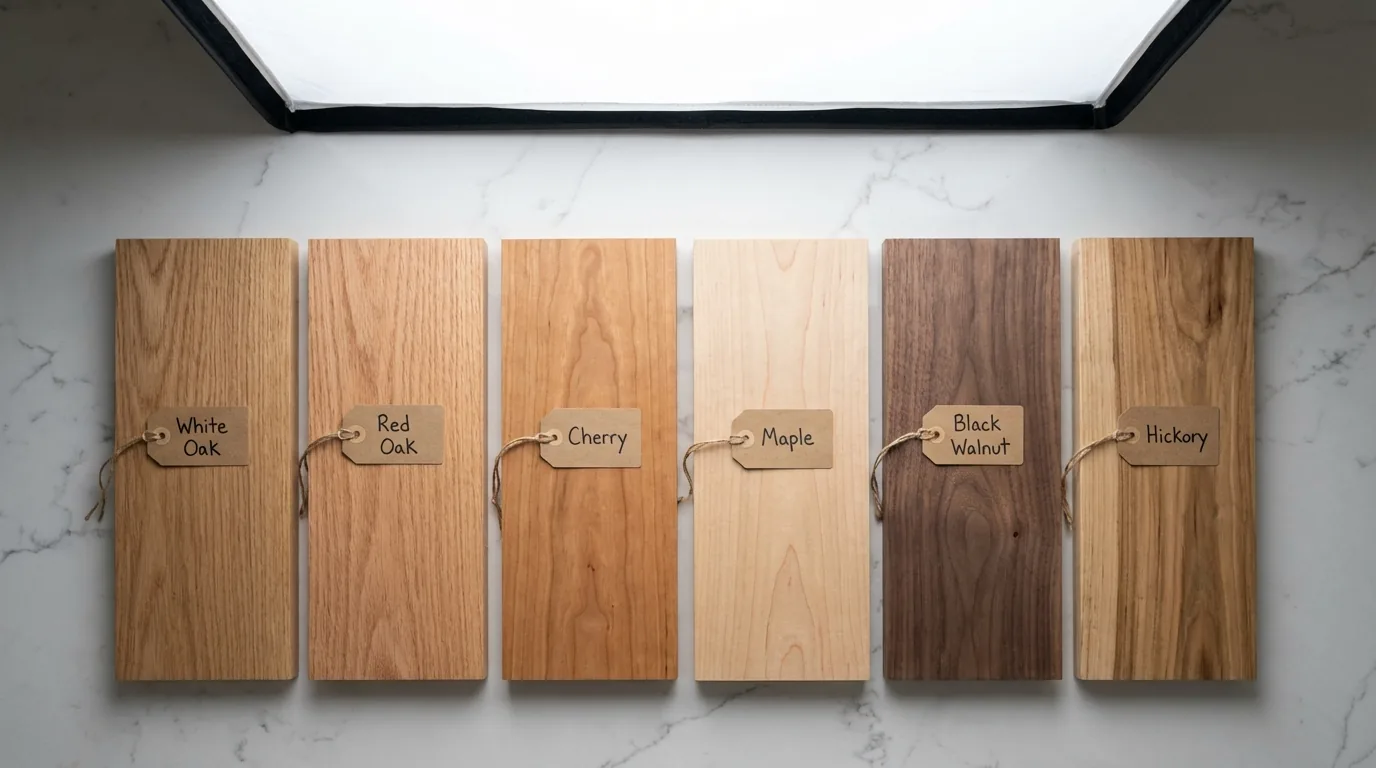
There are two types you'll see: red oak and white oak. Red oak has a slightly pinkish tone and a bold, open grain. White oak leans more golden-brown and has a tighter grain. White oak is also naturally more resistant to moisture, which is why it's the go-to for outdoor pieces and kitchen tables.
Pros: Extremely durable. Handles scratches, dings, and daily use better than most woods. Takes stain beautifully because the open grain absorbs color evenly. Most affordable hardwood option for Amish furniture. Easy to find in almost any Amish shop.
Cons: The strong grain pattern isn't for everyone. If you prefer a smooth, clean look, oak might feel too "busy." Red oak can look a little dated in certain styles, though white oak has made a huge comeback in modern farmhouse designs.
Best for: Dining tables, kitchen tables, kids' furniture, anything that needs to survive real life. If you have dogs, cats, or a houseful of kids, oak is your friend. Browse Amish dining room furniture and you'll see oak everywhere for exactly this reason.
Cherry: The One That Gets Better with Time
Cherry is special. When it's brand new, it has a light pinkish-brown tone that looks almost delicate. But here's the magic: over the years, exposure to light darkens it into a rich, warm reddish-brown. Furniture makers call this "patina," but you can think of it like a good leather jacket that just gets better the more you wear it.
This color change is natural and it's one of the main reasons people love cherry. Your piece of furniture literally transforms over 5, 10, 20 years. No refinishing needed.
Pros: Beautiful natural color that deepens with age. Smooth, fine grain with a slightly satiny look. Lightweight compared to oak and maple (easier to move around). Works beautifully in both traditional and modern styles.
Cons: Softer than oak, maple, and hickory. It dents and scratches more easily, so it's not the best choice for a kitchen table where your kids do homework every night. Costs more than oak, usually 15 to 30 percent more depending on the piece. Cherry also takes stain unevenly because the grain is so fine, so most Amish builders recommend a natural or light finish to let the wood do its thing.
Best for: Bedroom furniture, hutches, display cabinets, anything where you want beauty and you're not worried about heavy daily wear. If you want to learn more about how cherry compares head-to-head, check out our post on Oak, Maple, Cherry, and Walnut.
Maple: Hard, Smooth, and Clean
Maple is actually harder than oak. That surprises a lot of people. On the Janka hardness scale (which measures how resistant wood is to dents), hard maple scores around 1,450 compared to red oak at 1,290. It's tough stuff.
The look is completely different from oak, though. Maple has a very fine, subtle grain that's almost creamy. It's smooth and clean. If oak is a pair of rugged work boots, maple is a pair of white sneakers. Both are great, just a different vibe.
Pros: Extremely hard and durable. Smooth, consistent surface that looks great in modern and Shaker-style furniture. Takes paint well if you want a solid-color finish. Lighter color brightens up a room.
Cons: Maple can be tricky with stains. Because the grain is so tight and fine, stain doesn't absorb evenly. You can end up with blotchy spots, especially with darker stains. A skilled Amish builder knows how to handle this (gel stains and pre-conditioners help), but it's something to discuss before you order. Also costs a bit more than oak.
Best for: Kitchen furniture, Shaker and Mission style pieces, modern/contemporary designs, cutting boards, and anything where you want a smooth, clean look. Maple is also a popular choice for Amish office furniture like desks and bookcases.
Hickory: Bold, Wild, and Unbelievably Strong
Hickory is not for the faint of heart. It has the most dramatic color variation of any common furniture wood. A single board might go from creamy white to chocolate brown. That means every piece of hickory furniture looks one-of-a-kind, because it literally is.
It's also the strongest domestic hardwood you'll find in furniture. Hickory scores around 1,820 on the Janka scale. That's nearly 50 percent harder than oak. If you dropped a cast iron skillet on a hickory table, the table would probably win.
Pros: Incredibly strong and dent-resistant. Dramatic, natural color variation gives each piece unique character. Great for rustic, cabin, and farmhouse styles. Often similar in price to oak or just slightly more.
Cons: The wild grain and color variation isn't for everyone. If you like things uniform and consistent, hickory will drive you nuts. It's also one of the hardest woods to work with, which means not every Amish shop offers it. Hickory can also be harder to stain evenly because of the color differences between boards.
Best for: Rustic dining tables, farmhouse kitchens, log cabin and country-style homes, bar stools, and benches. If your style leans toward natural and rugged, hickory is perfect. Check out Amish dining room stores to find shops that work with hickory.
Walnut: Dark, Rich, and Refined
Walnut is the premium option. It's naturally dark, ranging from chocolate brown to a deep purplish-brown, with streaks of lighter sapwood that add dimension. You don't need to stain walnut to make it look expensive. It just does.
The grain is straight and open, but softer and more flowing than oak. Think of it as oak's more refined, dressed-up cousin.
Pros: Stunning natural dark color without needing stain. Beautiful grain that photographs incredibly well (great if you care about how your dining room looks on camera). Medium hardness, so it's workable but still durable. Gets more beautiful as it ages, developing a warm golden undertone.
Cons: Most expensive wood on this list. Walnut trees grow slower and the lumber is less available, so prices reflect that. Expect to pay 30 to 50 percent more than oak for the same piece. Also slightly softer than oak and maple (Janka score around 1,010), so it does show wear in high-traffic spots. And the naturally dark color means it doesn't play well with dark stains. There's nowhere to go darker.
Best for: Statement pieces. A walnut dining table, a live-edge coffee table, a headboard. It's the wood you choose when you want the furniture to be the centerpiece of the room. Many stores in Ohio and Pennsylvania offer walnut custom orders.
A Few Less Common Options
Elm has a wild, interlocking grain that creates beautiful visual patterns. It's tough and affordable, but harder to find because of Dutch Elm disease. Some Amish builders specialize in reclaimed elm, which has a lot of character.
Cedar is lightweight and naturally resistant to insects and moisture. You'll see it mostly in outdoor furniture, hope chests, and closet linings. It smells incredible and weathers to a beautiful silver-gray if left untreated.
Pine is the softest and most affordable option. It dents easily and isn't ideal for fine furniture, but it works well for kids' furniture, mudroom benches, and casual farmhouse pieces. Some people love the knotty, rustic look.
Quarter-sawn white oak deserves its own mention. It's cut at a specific angle to the growth rings, which creates a distinctive flecked pattern called "ray flake." It's the signature look of Mission and Arts & Crafts style furniture. It costs more than regular white oak because less lumber comes from each log, but the look is worth it for that style.
Now Let's Talk About Stains
Here's where a lot of people get confused: stain and finish are two different things.
Stain changes the color of the wood. It soaks into the grain and alters how the wood looks. Think of it like hair dye for furniture.
Finish goes on top and protects the wood from water, scratches, and daily wear. Think of it like a clear coat on a car.
Most Amish furniture gets both. The stain gives you the color you want, and the finish locks it in and protects it for decades.
How Different Woods Take Stain
This is important and most furniture guides skip it. Not every wood takes stain the same way. The grain pattern, density, and natural color all affect the result.
Oak is the stain champion. The open grain absorbs stain evenly and consistently. You can go light, dark, or anywhere in between and it'll look great. That's one reason oak is so popular. You can make a single piece of oak furniture fit almost any room by choosing the right stain.
Cherry is best left natural or with a very light stain. The fine grain doesn't absorb dark stains evenly, and honestly, cherry's natural color and aging process are the whole point. If you're going to stain cherry dark, you might as well just buy walnut.
Maple is the tricky one. It can blotch with standard stains because the grain is so tight. A good Amish builder will use a gel stain or a pre-stain conditioner to get an even result. But even then, very dark stains on maple can look unnatural. Maple looks its best in its natural color, a light stain, or painted.
Hickory already has so much natural color variation that stain adds another layer of unpredictability. Light stains can enhance the contrast between light and dark boards. Dark stains can tone it down and make it more uniform. But the result always has some variation, and that's part of its charm.
Walnut is usually finished natural or with a clear coat. It's already dark and beautiful. You can lighten it slightly with a blonde or whitewash finish if you want, but most people choose walnut specifically for its natural dark tone.
Common Stain Colors You'll See in Amish Shops
Most Amish furniture builders offer 15 to 30 stain options. That sounds overwhelming, but they generally fall into a few families:
Natural / Clear: No color added. Just a clear protective finish that lets the wood's real color show through. This is the purest look and the best way to see the wood's grain and character.
Golden / Honey: A warm, light tone that enhances the wood's natural warmth. Popular on oak and maple. Makes a room feel bright and inviting.
Medium Brown (Michaels Cherry, Boston, Provincial): The most popular family. Warm, traditional, works with almost any decor. This is what most people picture when they think "wood furniture."
Dark Brown / Espresso (Coffee, Rich Tobacco, Acres): Deep, rich, dramatic. Popular in formal dining rooms and bedrooms. Looks stunning on oak. Just know that very dark stains can hide the wood's natural grain, which is part of what you're paying for.
Gray / Weathered (Driftwood, Fog, Mineral): A modern option that's gained popularity in the last few years. Gives a coastal or industrial feel. Works best on oak and hickory.
Two-tone: One stain on the top and a different stain (or paint) on the base/legs. Very popular for farmhouse dining tables. You'll see combos like a dark walnut top with white painted legs, or a natural maple top with a gray base.
Common Finishes on Amish Furniture
After the stain, the finish goes on. Here's what you'll typically see:
Catalyzed conversion varnish is the standard in most Amish shops, and it's actually better than what you'll find on most factory furniture. It's sprayed on and dries hard, creating a smooth, durable surface that resists water, heat, and chemicals. It's easy to clean and holds up for years.
Polyurethane is another common option. It's thick and durable but can yellow slightly over time, especially on lighter woods. Good protection for heavy-use pieces.
Oil finishes (like Danish oil or tung oil) soak into the wood instead of sitting on top. They give a very natural, matte look where you can feel the actual wood grain under your hand. The downside is they offer less protection than varnish and need to be reapplied every year or two.
Wax finishes give a soft, low-sheen look that feels warm and organic. Beautiful, but the least protective option. Best for pieces that won't see heavy daily use.
How to Choose: A Simple Decision Guide
Feeling overwhelmed? Here's a quick way to narrow it down.
Ask yourself three questions:
1. How will this piece be used? Daily family workhorse (dining table, kitchen island)? Go with oak, maple, or hickory. They can take it. Display or bedroom piece? Cherry or walnut are gorgeous options.
2. What's your style? Modern and clean? Maple. Rustic and natural? Hickory. Traditional and warm? Oak or cherry. Dark and refined? Walnut. Farmhouse? White oak or a two-tone finish.
3. What's your budget? Oak is the most affordable. Maple and hickory are mid-range. Cherry is a step up. Walnut is at the top. But remember: even the "expensive" Amish woods are a better deal long-term than cheap furniture you'll replace in five years. (We break down the real cost-per-year math in our furniture cost guide.)
And when it comes to stains, the best advice is simple: ask for samples. Any good Amish furniture shop will have sample boards showing how each stain looks on each wood type. What you see on a screen never matches real life. Visit a showroom, hold the samples up in different light, and trust your eyes.
Ready to See These Woods in Person?
Photos and descriptions only get you so far. The best way to choose is to walk into a showroom, run your hand across the wood, and see how the stains look in real light. Browse Amish furniture stores near you and find a shop where you can see the difference for yourself. If you're near Ohio, you're in luck. Holmes County alone has dozens of showrooms within a short drive. Check out our guide to the best Amish furniture stores in Ohio to plan your visit.