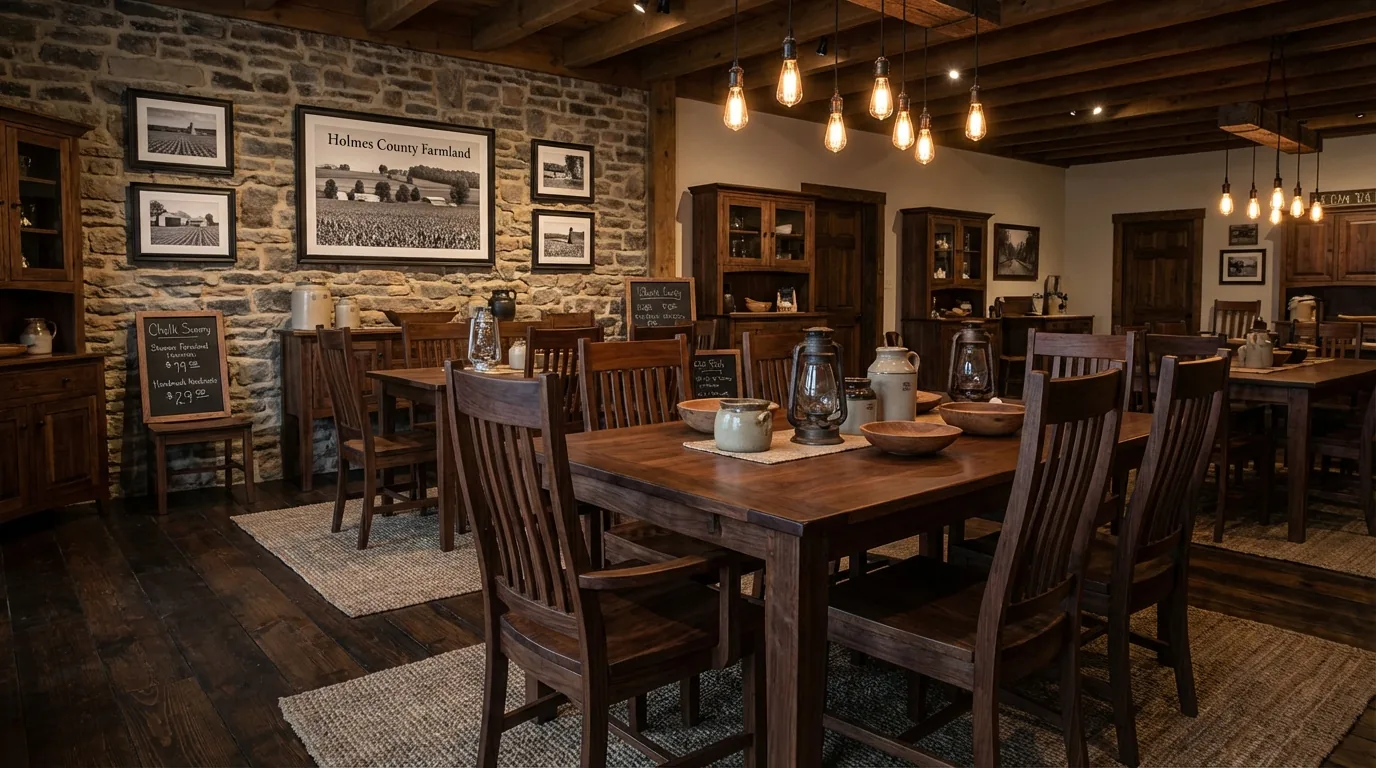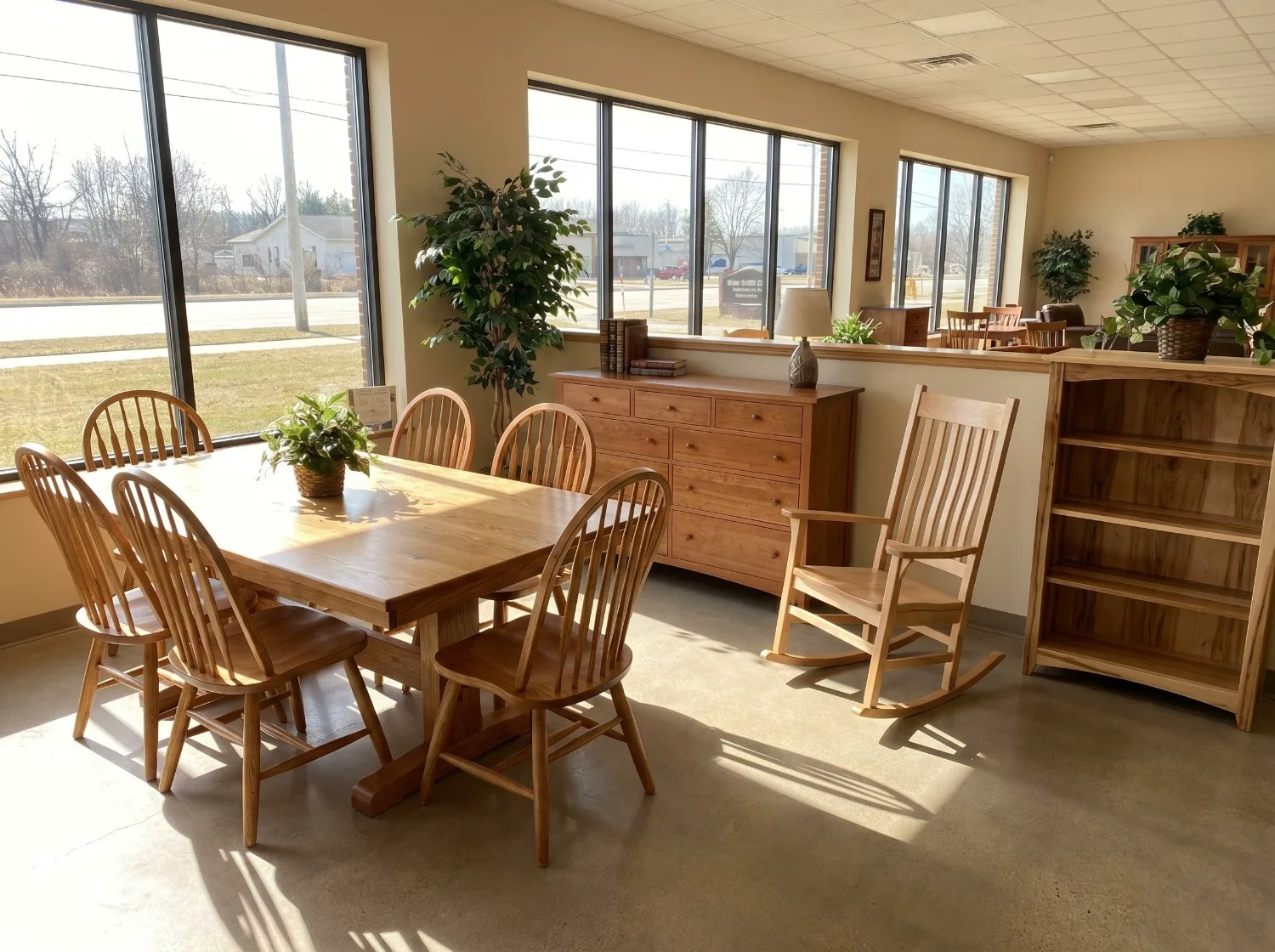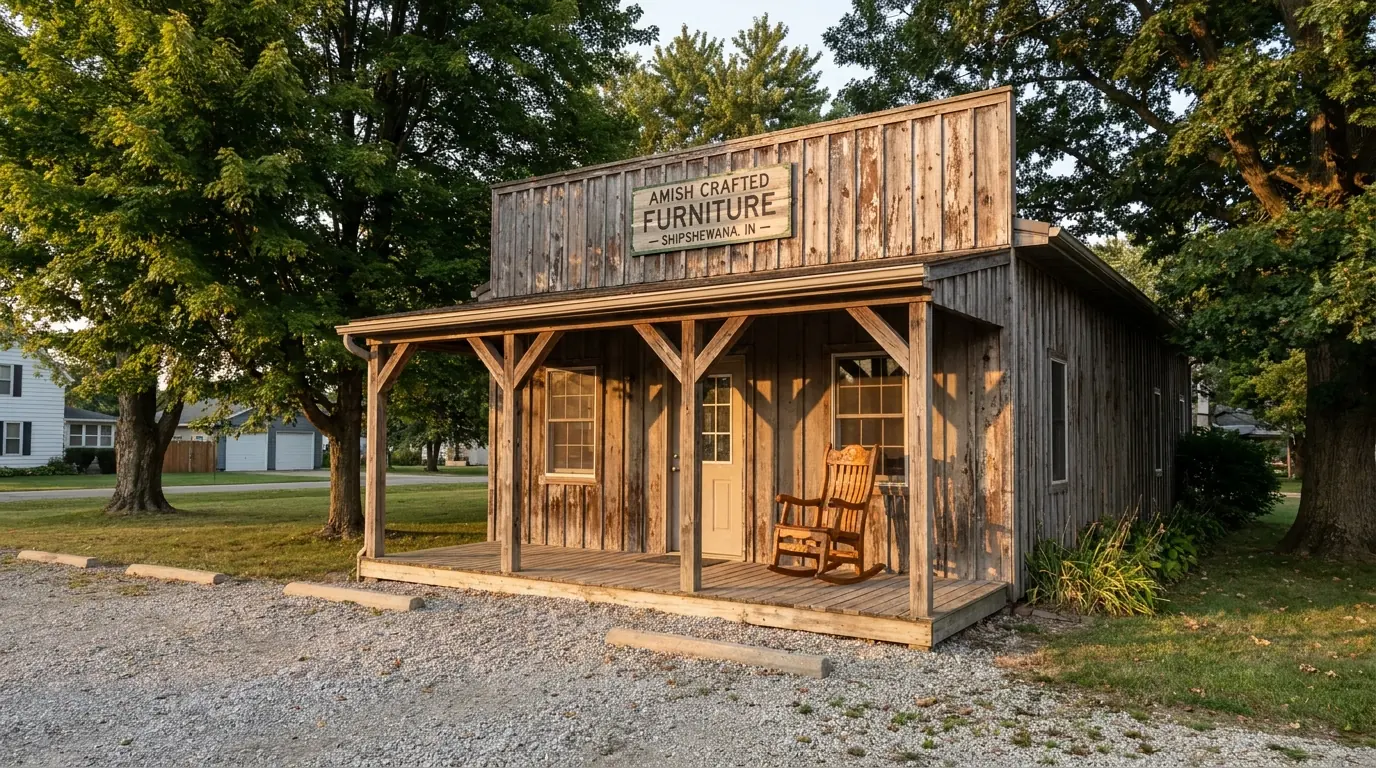
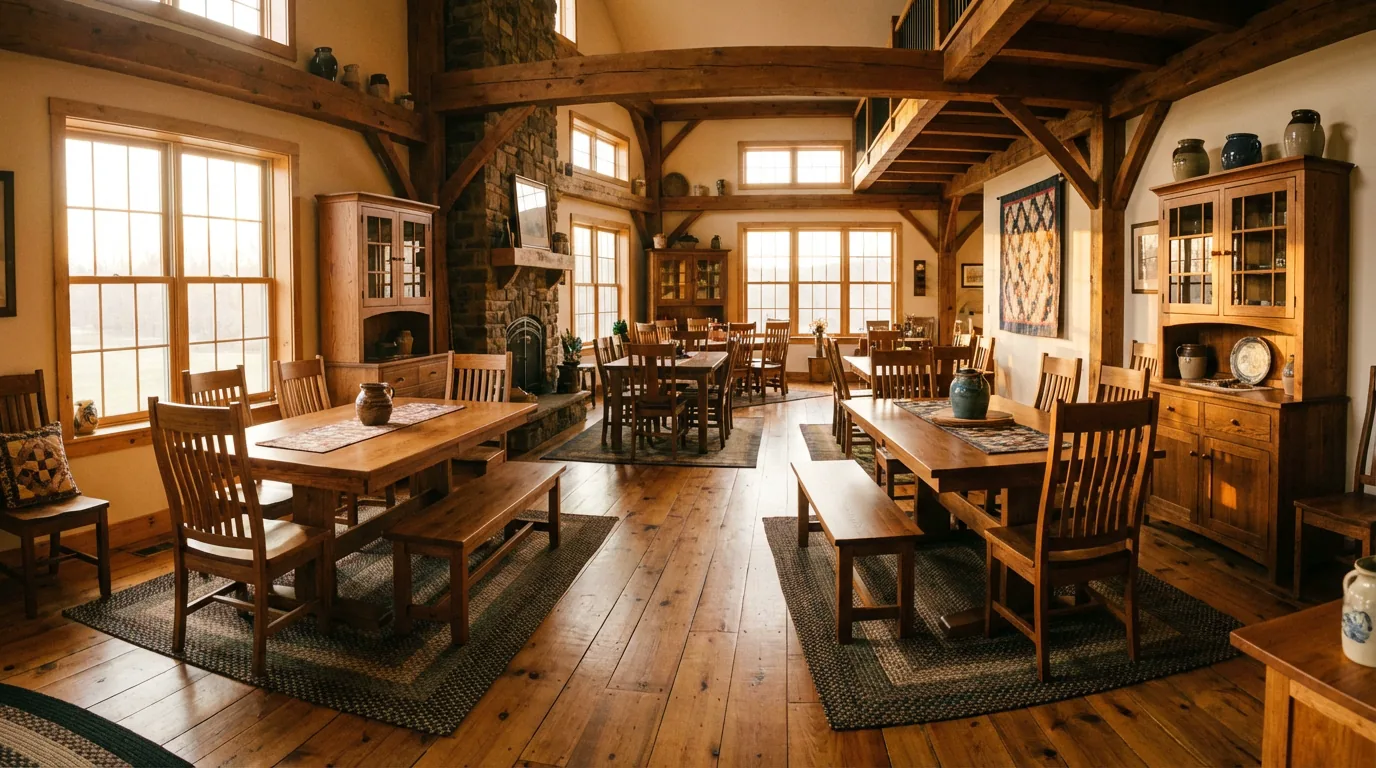
Shopping in person is still the fastest way to understand whether an Amish furniture retailer matches your needs. Photos can help you notice style, but a showroom lets you test chair comfort, compare finish tone, judge table scale, and see how a store explains craftsmanship when you ask direct questions.
The best showroom trip starts before you leave home. Use the Amish furniture stores by state page to narrow your area, then compare two or three likely stores instead of trying to visit every listing in one day. If you are in a dense market, the Ohio Amish furniture stores and Pennsylvania Amish furniture stores pages are good examples of why a short list matters.
Start with a short list
Before you drive, decide what kind of store visit would actually move the purchase forward. A shopper replacing a dining set needs to compare table sizes, extension leaves, chair comfort, finish samples, and delivery timing. A shopper ordering a bedroom set needs to check drawer construction, dresser scale, matching pieces, and lead times. A shopper buying outdoor poly furniture needs to compare hardware, color combinations, and weather exposure expectations.
Build your first list by category. If the room is dining, browse Amish dining room furniture stores. If you need a custom size, start with custom Amish furniture stores. Then use showroom availability and location to narrow the list to two or three practical stops.
Call before you go
A five-minute call can save hours. Confirm the store is open, ask whether the furniture category you care about is on the floor, and ask whether the salesperson can show finish or wood samples. Smaller retailers sometimes have excellent custom programs but limited display space, while larger showrooms may have many pieces but fewer examples of a specific style.
The call also tells you how clearly the store communicates. You do not need a polished sales pitch, but you do want direct answers. Ask, "Do you have dining tables in solid cherry on display?" or "Can I see examples of maple and oak finishes?" A good showroom will either confirm what is available or tell you what to expect before you drive.
Bring the right notes
Bring room dimensions, doorway measurements, photos of the space, preferred wood species, approximate budget, and any style references you like. If you are replacing an existing table, write down its size and what you dislike about it. If you are buying chairs, note who will use them most and whether seat height, arms, or cushion options matter.
Those details keep the conversation practical. Instead of asking a broad question like "What do you recommend?" you can ask, "What table length works for this room if I want six chairs most days and eight for holidays?" That type of question helps the salesperson compare fit, function, and cost instead of just pointing to the largest display.
Compare comfort and construction
In a showroom, sit in the chairs. Open drawers. Look under the table if the store allows it. Ask what parts are solid wood, what finish is used, and how the piece is joined. You do not need to become a furniture builder, but you should understand the basics: wood species, finish durability, drawer construction, hardware options, and whether the item is stock, made-to-order, or fully custom.
Comfort matters too. A chair that looks perfect but feels awkward will not become better after delivery. Sit for a few minutes, compare arm and side chairs, and ask whether alternate seat shapes or cushions are available. For bedroom furniture, test drawer glide and check whether the scale feels right for a real room rather than a large showroom floor.
Ask about lead times and delivery
Amish furniture is often made to order, so the timeline can vary. Ask what is in stock, what is built after purchase, and what changes the schedule. Wood species, finish choice, size changes, and matching pieces can all affect timing. Delivery also matters: some stores deliver locally, some ship regionally, and some use third-party carriers.
Get the expected timeline in writing when you move close to ordering. Also ask what happens if a finish sample looks different from the final piece, whether deposits are refundable, and how service issues are handled after delivery. These questions are not dramatic; they are normal buying questions for furniture meant to last years.
Take useful photos and notes
Before leaving a showroom, write down the exact model name, wood species, finish, quoted size, and price range for any piece you liked. If the store allows photos, take one wide shot for scale and one close photo of the finish or detail. Do not rely on memory after visiting multiple stores. Dining tables and bedroom sets can blend together quickly.
Use the compare notes the same day while the visit is still fresh. A store with a smaller showroom but clearer answers may be the better choice than a larger store where you felt rushed. A slightly higher quote may also be reasonable if it includes delivery, setup, stronger customization, or better service.
Plan the next step before you leave
End the visit with one clear next action. That might be requesting a written quote, confirming delivery distance, asking for a finish sample, or measuring your dining room again before ordering. The goal is not to visit more showrooms. The goal is to visit the right ones and leave with enough information to make a calm decision.
If you are still unsure, rank each store on three things: product fit, communication, and total purchase clarity. Product fit covers the pieces, wood choices, and finish options. Communication covers whether the staff answered questions directly. Purchase clarity covers lead time, delivery, service, and quote details. A showroom that scores well on all three is usually worth a second call.
When you are ready to continue researching, compare specific listings such as Dutch Craft Furniture in Millersburg, Ohio, Homestead Furniture in Mt Hope, Ohio, and Eastwood Amishcraft Furniture in Kidron, Ohio. Then use the compare tool to keep your shortlist organized on this device.