To check whether furniture is Amish made, ask the seller who builds the exact piece, where the workshop is located, and what materials are used in each component. Request those details in writing before paying a deposit. A furniture style, a wood grain pattern, or a high price cannot establish who made it.
The useful question is specific: “Who builds this table?” A general statement about a store selling Amish furniture leaves you with more work to do. This checklist helps you connect the item you want with its builder, construction, and order terms.
Separate the maker, the material, and the style
These descriptions answer different questions:
Amish made: A claim about who built the furniture. Ask about the workshop behind the specific model.
Amish style or Amish inspired: A description of appearance. It does not identify the builder.
Solid wood: A description of material. Ask which parts are solid wood and which wood species are used.
Made in the USA: A claim about manufacturing location. It does not identify a maker as Amish.
Treat a product described as “Amish-style solid wood furniture” as a starting point for questions. That wording alone does not tell you that an Amish workshop made it. Likewise, confirming the builder does not answer every question about durability, comfort, or service.
1. Ask who builds the exact piece
Start with the model or collection name, then ask:
Which workshop or builder makes this model?
In which town and state is it built?
Is this item made by an Amish builder, a Mennonite builder, or another manufacturer?
Does the seller work directly with that workshop or through a supplier?
The distinction can matter if you specifically want Amish-made furniture. For example, DutchCrafters states that its custom solid wood furniture comes from Amish or conservative Mennonite craftspeople. That is a reason to ask about the individual item rather than infer its maker from the retailer's name. See DutchCrafters' explanation of its builders.
A seller may use a collection name or supplier reference instead of publicly naming an individual craftsperson. Ask for an explanation that connects that reference to your item and its workshop location. “It comes from Amish country” is less useful than a product-specific answer.
Keep the answer with your quote. You are looking for a documented sourcing explanation; an appearance check cannot independently prove the builder's identity.
2. Ask what each component is made from
“Is it solid wood?” is a good opening question. “What are the top, frame, drawer sides, drawer bottoms, and back panel made from?” gives you a much clearer answer.
For a dining table, ask about the top, leaves, apron, and base. For a dresser, ask about the case, drawer fronts, drawer boxes, bottoms, and back. For upholstered seating, ask about the frame as well as the fabric and cushions.
Plywood in a drawer bottom does not automatically mean a piece is poorly made or that its Amish-made claim is false. DutchCrafters explains that its builders use plywood in selected components to help accommodate the effects of seasonal wood movement. Ask where it is used and why. Read the retailer's explanation of plywood in solid wood furniture.
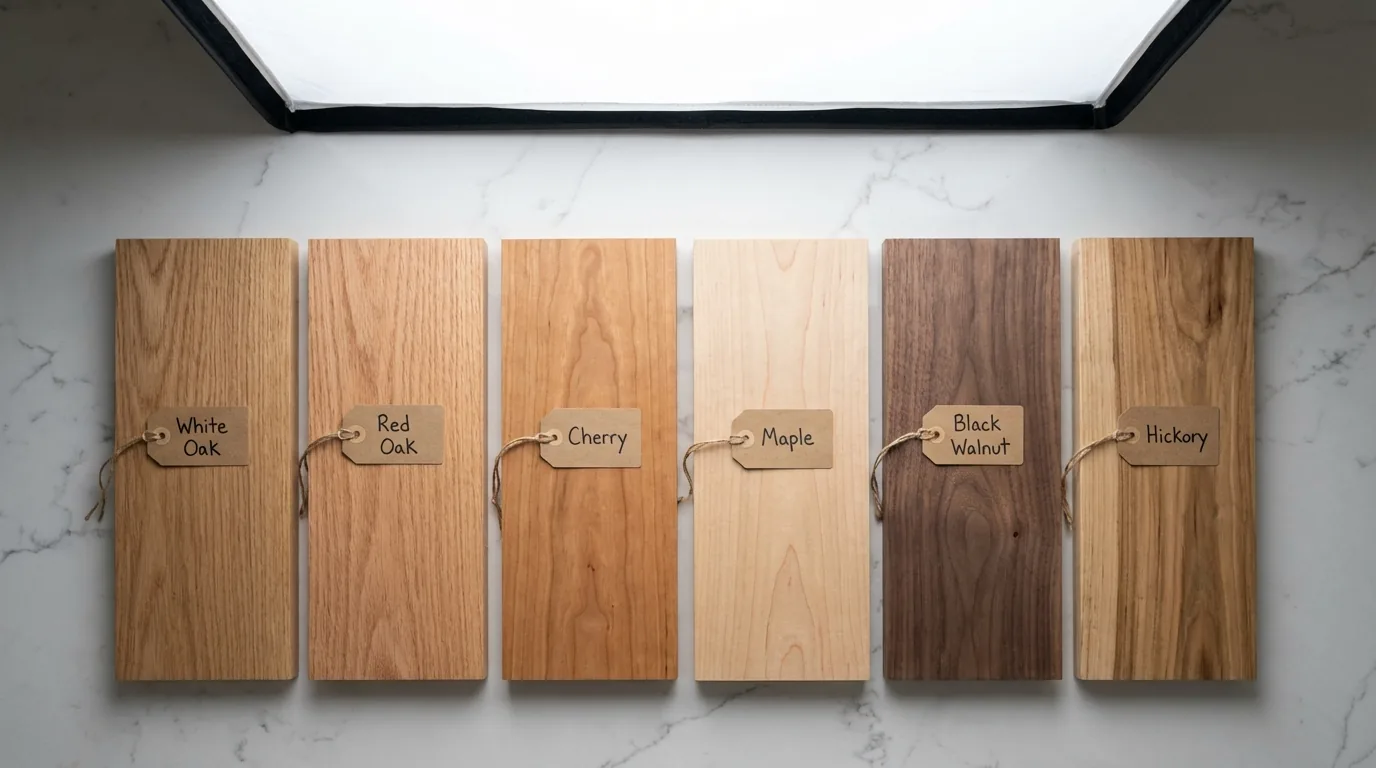
Also separate the wood species from the stain color. A walnut-colored finish does not tell you that the underlying wood is walnut. Ask for the actual species and, when available, a finish sample on that species. Our guide to Amish furniture wood types and stains explains the choices you are likely to encounter.
3. Inspect the construction that matters for your purchase
Once you understand the sourcing, check how the piece works. These observations help you assess the furniture; they do not identify the maker's community.
Dining tables: With the seller's help, open the extension mechanism, fit the leaves, and check that the table feels stable. Sit at it to check knee room and the placement of the base.
Chairs: Sit in each style you are considering. Check comfort and unwanted movement at the legs, seat, and back.
Dressers and cabinets: Open several drawers and doors. Look for smooth operation, consistent alignment, and an explanation of the drawer construction and hardware.
Beds: Ask about rails, slats, center support, and compatibility with your mattress or adjustable base.
If you are shopping online, request close-up photos or a short video of these details for the model you want. A staged room photograph usually will not show the drawer bottom, table mechanism, or bed support system.
Dovetail drawers can be a useful construction detail to discuss. They are not proof of Amish origin. Avoid treating one joint, the furniture's weight, or a rustic finish as an authenticity test.
4. Get the specifications and order terms in writing
Before paying a deposit, request an itemized quote or order confirmation that includes:
The model or collection, builder or supplier reference, and workshop location.
Final dimensions, quantity, wood species, finish, and hardware.
Any plywood, veneer, or other materials discussed, with the components identified.
The furniture price, customization charges, delivery and setup charges, and applicable tax.
The deposit, balance due, and cancellation or return terms for your order.
The estimated production and delivery windows.
The written warranty, its exclusions, and who handles a service request.
Ask whether delivery includes carrying the furniture inside, assembly, placement, and packaging removal. Check stair or access charges if they could apply to your home.
If you are comparing two quotes, confirm that they cover the same size, species, construction, and delivery service. Otherwise, the lower total may describe a different purchase. Our guide to questions before ordering custom furniture covers the order approval process in more detail.
5. Check the seller as well as the furniture
Confirm the business's address, contact information, and showroom access. Call before planning a visit. Read recent reviews for details about communication, delivery, and how the seller handled problems.
If a seller cannot answer a materials question immediately, ask them to check with the workshop. A follow-up answer is more useful than a guess. If a detail that matters to your purchase remains unclear, resolve it before ordering.
Use Amish Furniture Directory's state pages to find retailers, then save a short list to compare their listing details. Confirm product sourcing, stock, prices, and delivery directly with each seller.
Our verified listings have manually checked core details such as the business name, contact information, location, and categories. This describes the listing review; it does not certify the origin or construction of every item a retailer sells.
What a useful product description looks like
The following is an illustrative example, not a quote from a particular retailer:
“This dresser is built by our Amish workshop supplier in northern Indiana. The case and drawer fronts are solid cherry. The drawer sides are solid maple, and the drawer bottoms are plywood. Your quote identifies the collection, dimensions, finish, delivery service, and written warranty.”
This answer connects the maker, materials, and order documentation to a particular item. You can use it to ask follow-up questions. “Authentic Amish quality” on its own leaves those details unanswered.
Copy this message when you contact a seller
I'm interested in [model or collection]. Can you confirm who builds this specific piece, where the workshop is located, and whether the maker is Amish, Mennonite, or another manufacturer?
Please identify the wood species and materials used in its main components, including any plywood or veneer. I'd also like an itemized quote showing dimensions, finish, delivery and setup, deposit, estimated timing, cancellation or return terms, and warranty coverage.
If available, please send close-up photos of the construction details and information about finish samples. My delivery ZIP code is [ZIP code].
Frequently asked questions
Can Amish-made furniture contain plywood?
Yes. DutchCrafters describes using plywood in selected parts of its solid wood furniture. Ask about each component so you know what you are buying. A plywood drawer bottom alone cannot establish who built the piece. See the retailer's materials explanation.
Can Amish furniture be made using power tools?
Yes. Countryside Amish Furniture explains that many Amish workshops use power tools, including pneumatic systems, and that permitted technology varies by community. Tool use alone is not a reliable authenticity test. Read Countryside's explanation of Amish workshops.
Does a store have to be in Amish country to sell Amish-made furniture?
A retailer's address does not establish the origin of an individual product. Ask where the specific item is built and how the seller sources it. Use the same checklist for a local showroom and an online retailer.
What if the seller cannot identify the builder?
Ask for the supplier or collection reference, workshop location, and written explanation of the sourcing. If the seller still cannot support a maker claim that matters to you, keep comparing stores before paying a deposit.